
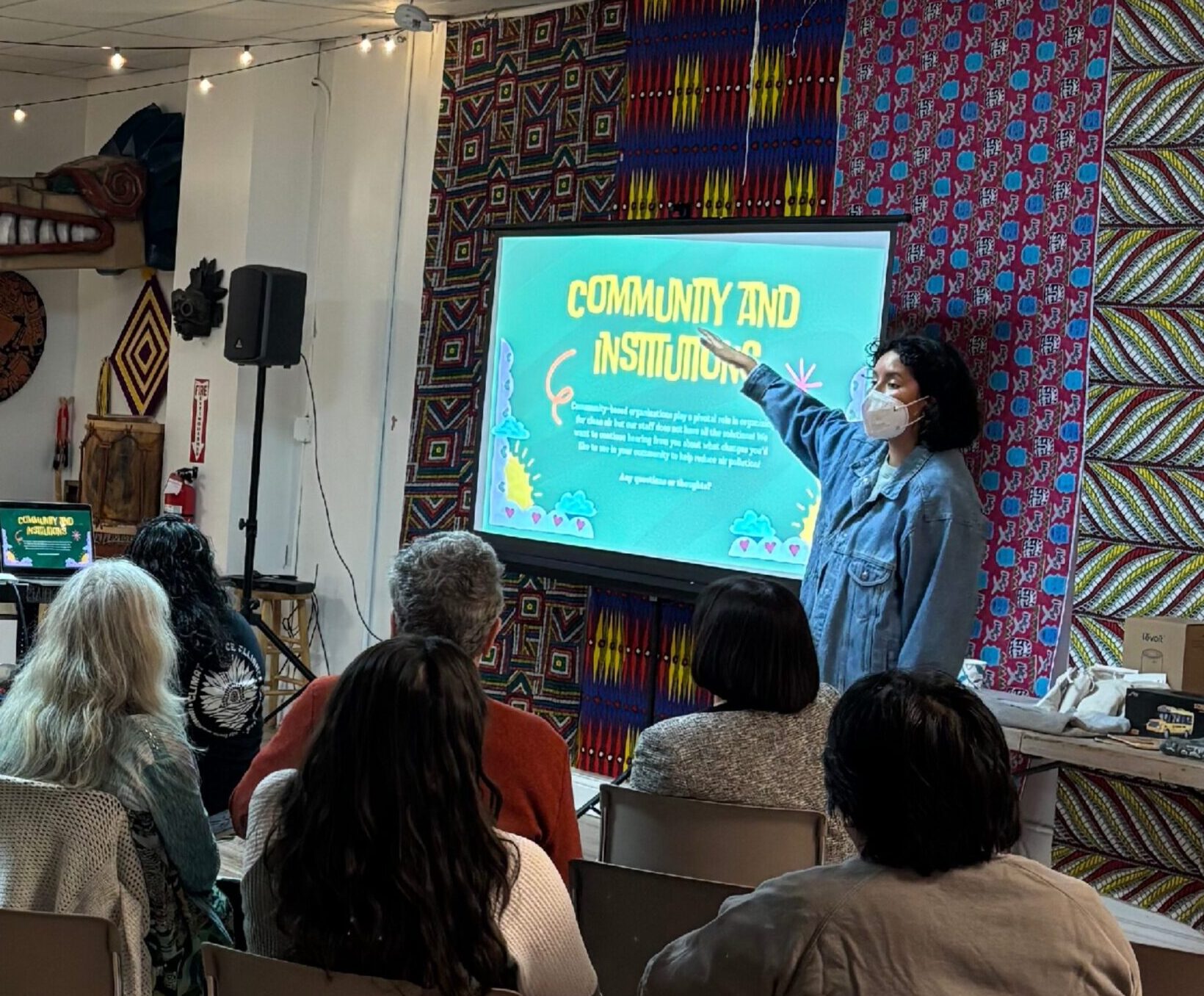
By Melanie Minuche, Sustainable Transportation & Environmental Justice Advocate at the Little Village Environmental Justice Organization
When severe storms knock out power, reliable electricity becomes more than a convenience. It becomes a lifeline. I know this firsthand. I grew up in a household that experienced energy insecurity. High utility bills piled up, poor insulation drove up energy costs and financial stress touched every part of daily life.
My family’s experience was not unique. Across Illinois and throughout the country, many communities face rising utility bills, deteriorating infrastructure and increasingly frequent climate disasters. These challenges motivated me to learn more about our electric grid and advocate for meaningful public participation in grid planning.
At the Little Village Environmental Justice Organization (LVEJO), I work to advance building and transportation decarbonization policies that help clear the air and lower energy burdens for communities across Illinois. For more than 30 years, LVEJO has worked alongside residents in Chicago’s Little Village neighborhood to address pollution, improve public health and advocate for the clean energy investments our community deserves.
A stronger, more resilient grid can help deliver those benefits while enabling cleaner transportation and healthier communities.
Testifying before the Illinois Commerce Commission
For many families struggling to afford housing, groceries, and other necessities, participating in utility planning processes may not seem like a priority. Yet decisions about the grid affect nearly every aspect of our lives – from keeping the lights on during extreme weather to enabling clean transportation options that reach neighborhoods that have long borne the burden of pollution. This is why I chose to testify in a ComEd grid planning proceeding. I wanted to use my voice to shape the future of my community’s energy system.
Through my testimony, I was able to paint a picture for the commissioners about the Little Village community, hoping that if they feel the health effects of the energy system, the diesel truck traffic that causes those problems, and the community’s desire to find solutions, including grid investments that will allow electric trucks to deliver goods in the neighborhood without making people sick, they will make decisions that reflect community interests.
A Stronger Grid for Cleaner Transportation
For fenceline communities like Little Village, a stronger grid is essential to reducing freight pollution.
Thousands of diesel trucks move through neighborhoods every day, delivering goods from across the country and around the world. While these trucks support economic activity, they also release harmful air pollution that contributes to asthma, respiratory illness and other health impacts in communities located near truck routes, warehouses and industrial facilities.
trucks and buses offer a cleaner alternative. Because they don’t produce tailpipe emissions, they can improve air quality for drivers, warehouse workers and residents living near heavily trafficked roads.
But transitioning to cleaner freight transportation requires more than vehicles. It requires charging infrastructure and a grid capable of supporting new electricity demand.
Too often, opponents of freight electrification point to charging capacity as a barrier to progress. That challenge underscores why proactive grid planning matters. Communities like Little Village need utilities, regulators and policymakers to invest in grid upgrades before demand arrives, particularly in areas where freight electrification is expected to grow.
Planning ahead reduces costs, improves reliability and accelerates the transition to cleaner transportation.
Centering Communities in Grid Planning
Historically, grid investments have often failed to reflect the needs of environmental justice communities.
Without meaningful public participation, investments can bypass the communities that stand to benefit most or even place new costs on residents by raising electric rates, without delivering clear benefits. The transition to a cleaner energy future will only succeed if the communities most affected by pollution and energy insecurity help shape it.
As climate impacts intensify, resilient grid infrastructure is becoming increasingly essential to public health and community wellbeing. Illinois recently experienced a record number of tornadoes, underscoring the need for a grid that can withstand extreme weather and keep critical services running when communities need them most.
A resilient, clean energy grid is more than an infrastructure investment. It is an investment in public health, cleaner air, reliable power and a more equitable future. The transition to a cleaner, more resilient energy system will only succeed if environmental justice communities have a meaningful voice in shaping the grid investments that affect their lives.